

Eigo Ganbare
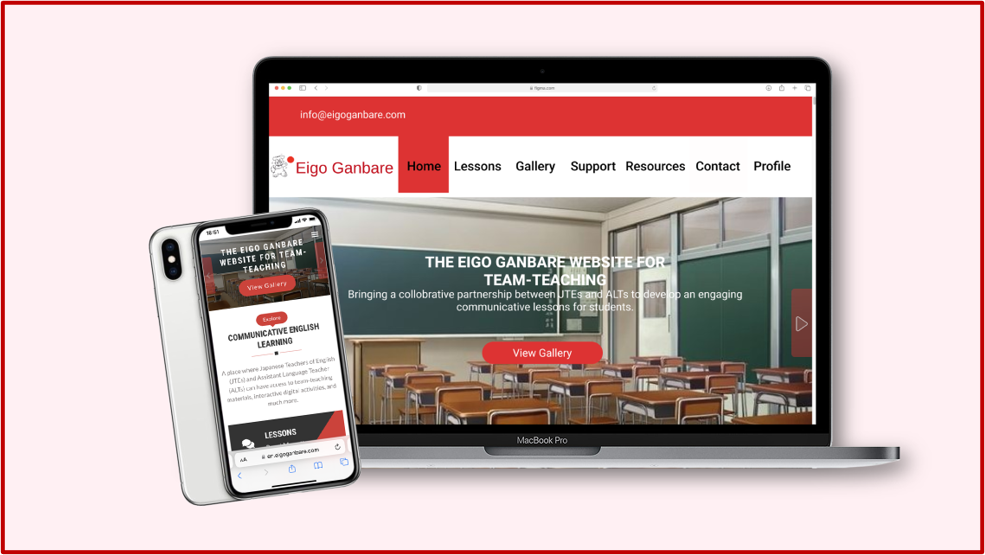
was established in 2010 to help Japanese Teachers of English (JTEs) and Assistant Language Teachers (ALTs) to work collaboratively in the classroom. I’ve provided them with lesson printouts that I created and then, it transitioned into creating an EdTech curriculum with interactive pair-work lessons, group communicative presentations, and gamifying the printouts. In 2022, I redesigned the aesthetic of the Eigo Ganbare website and simplify the user experience. Thus, they could navigate the website with ease, and I could provide them with newer lesson activities.
Goals
- Redesigned the UI/UX for the JTEs and ALTs experience, accessing a better team-teaching resource platform
- Integrated traditional teaching styles with modern methods
- Developed fun and engaging supplement learning activities through gamification
Problems
- ALTs made difficult lessons or their grammar introduction had not been taught by the JTEs yet
- Cultural differences in the teaching style between JTEs and ALTs
Design
User Experience, User Interface
Usability Testing, Design System
I’m the founder & the sole designer
User Flow
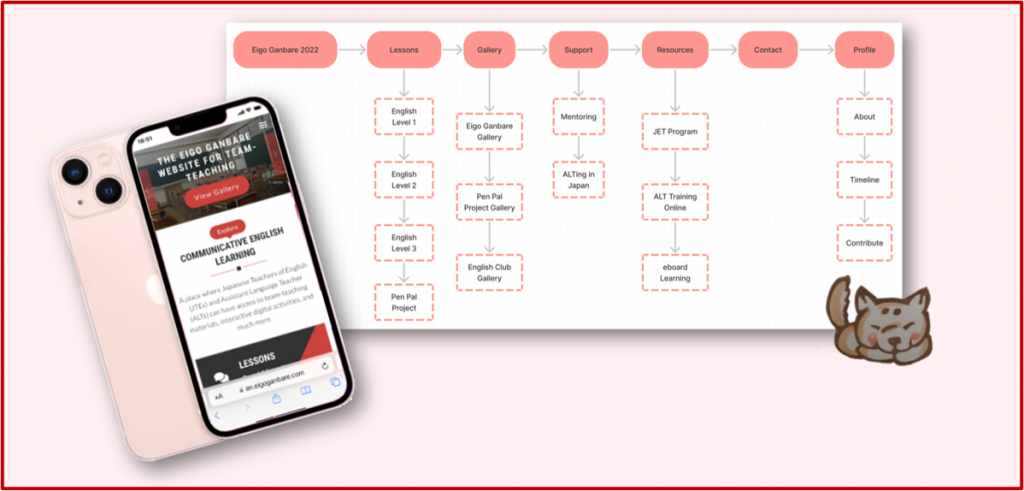
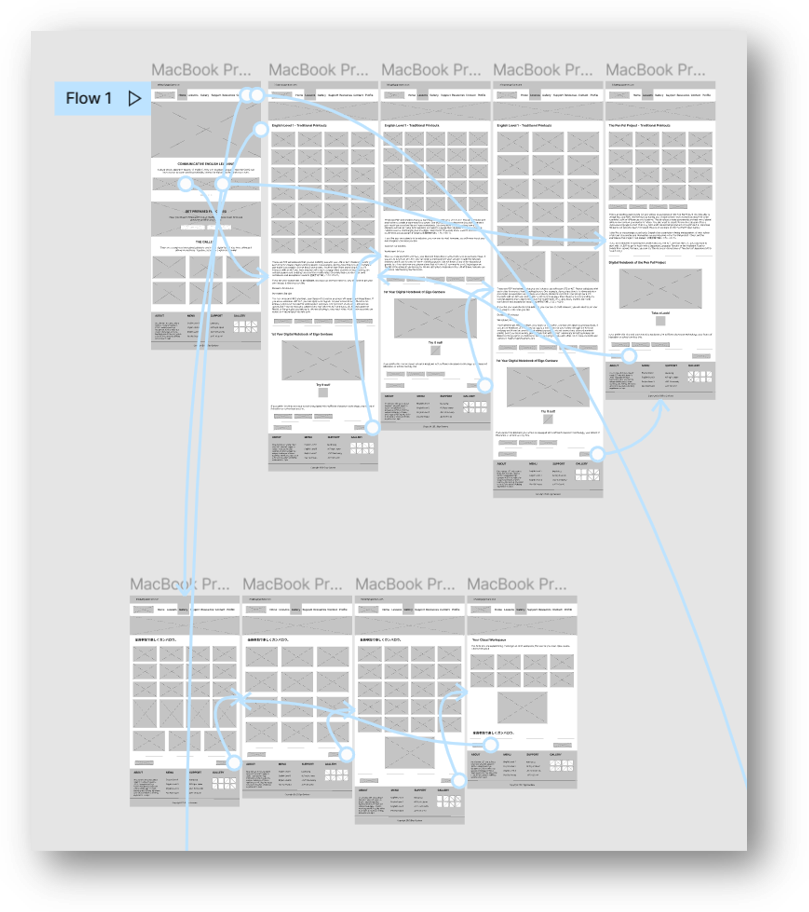
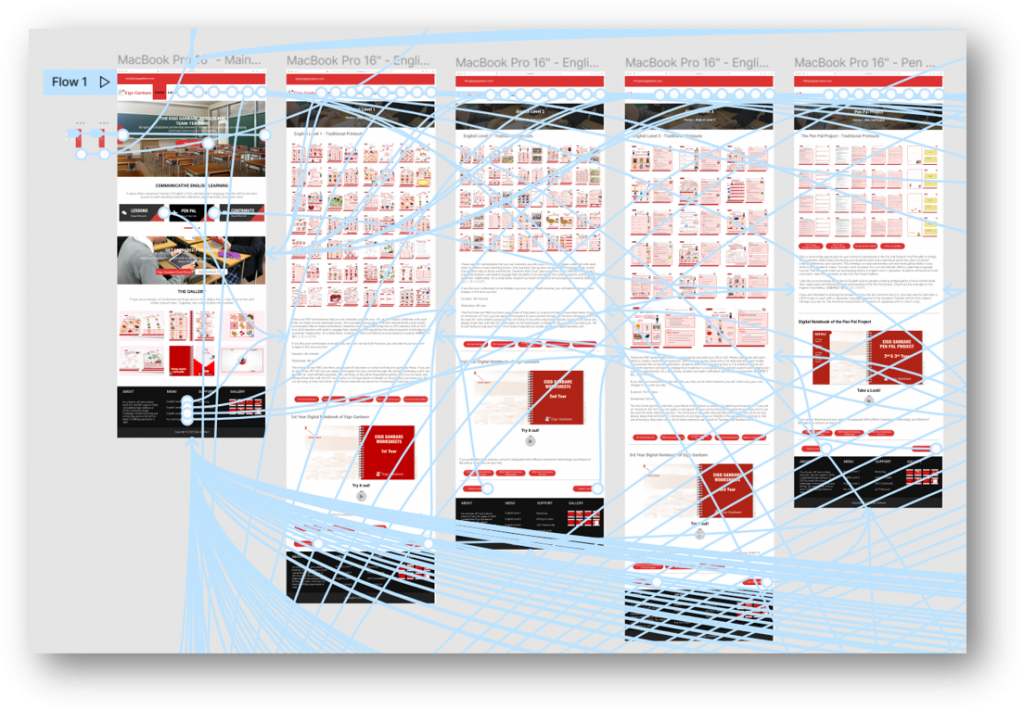
I provided an easier user flow for JTEs and ALTs to access the team-teaching materials, the Pen Pal project, and starting up an English Club. I also shared other resources and connected ALTs on an online community platform called ALTinginJapan on Reddit.
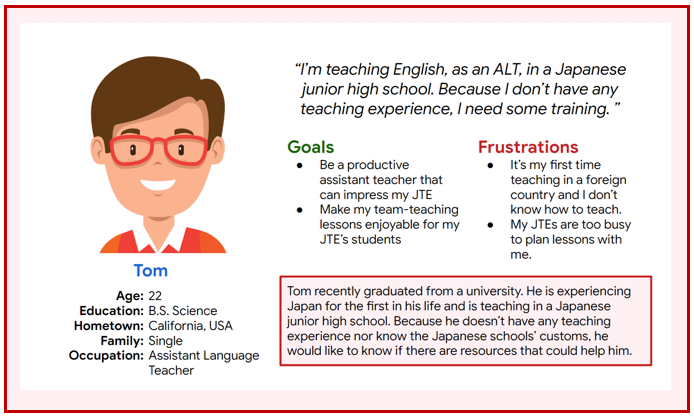
Personas
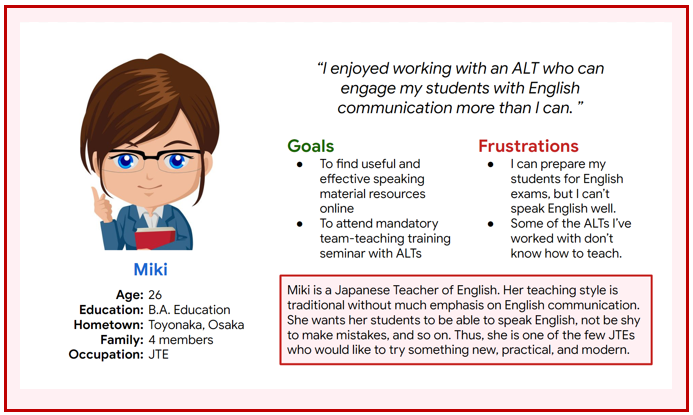
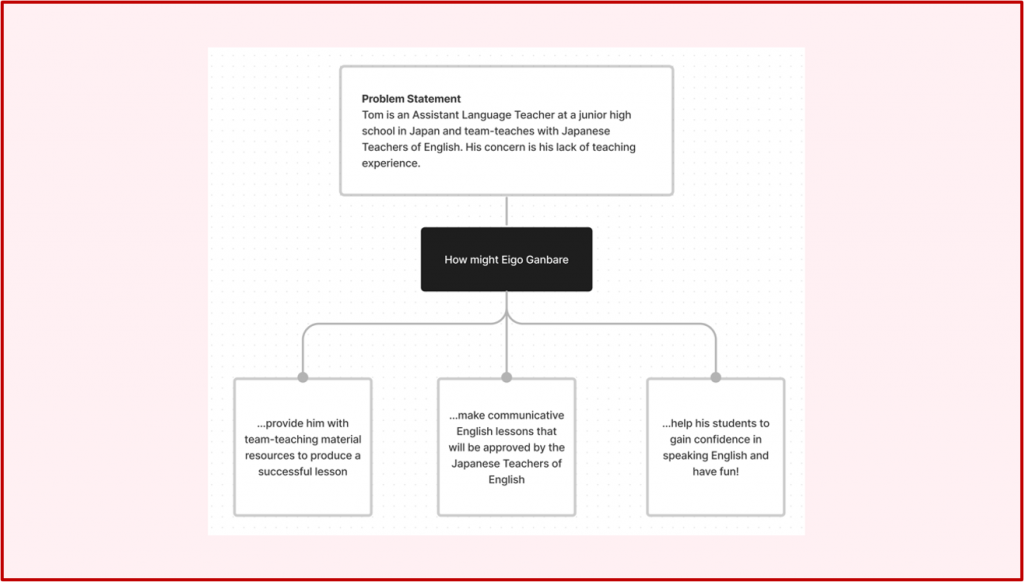
Identifying the Challenges
Design Mockups
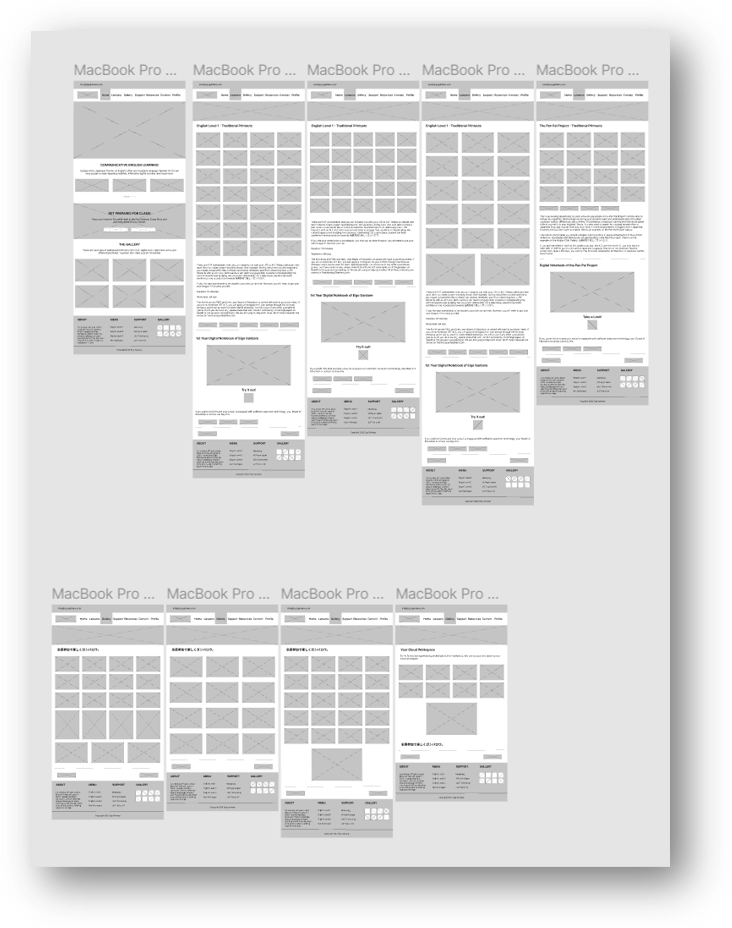
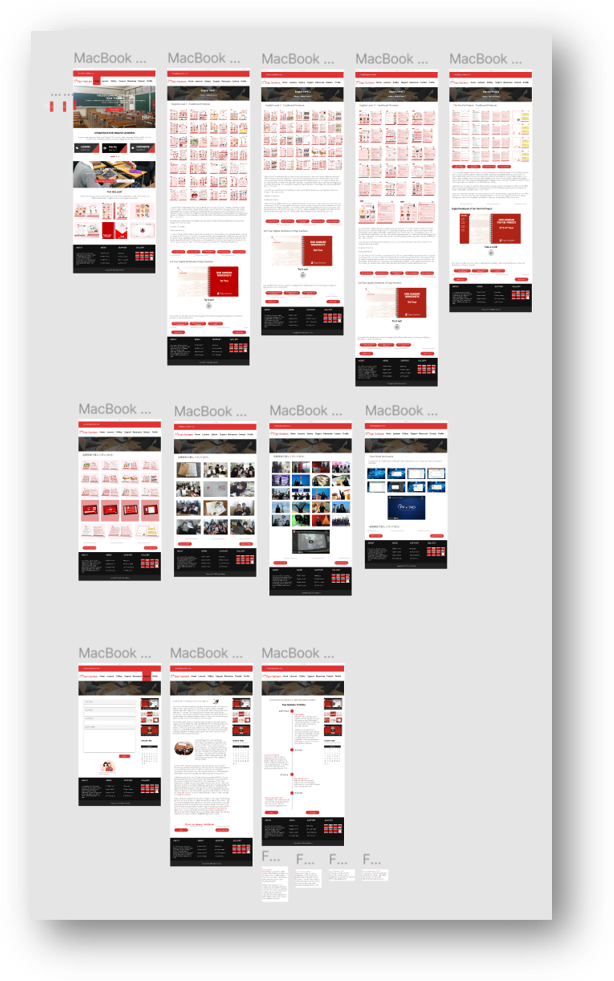
As I designed the low-fidelity mockups, I put myself in the users’ shoes and pulled from my own experience as an ALT in Japan. The mockup designs should be appealing to the users and adaptable between two countries’ styles of using educational technology.
I also put my mindset on how I should respond to the following questions. What do ALTs want if they were to use Eigo Ganbare? How do I bridge the gap between JTEs and ALTs so they produce effective team-teaching lessons? How can I contribute to helping teachers to improve the English education system in Japan?
Low-fidelity prototype
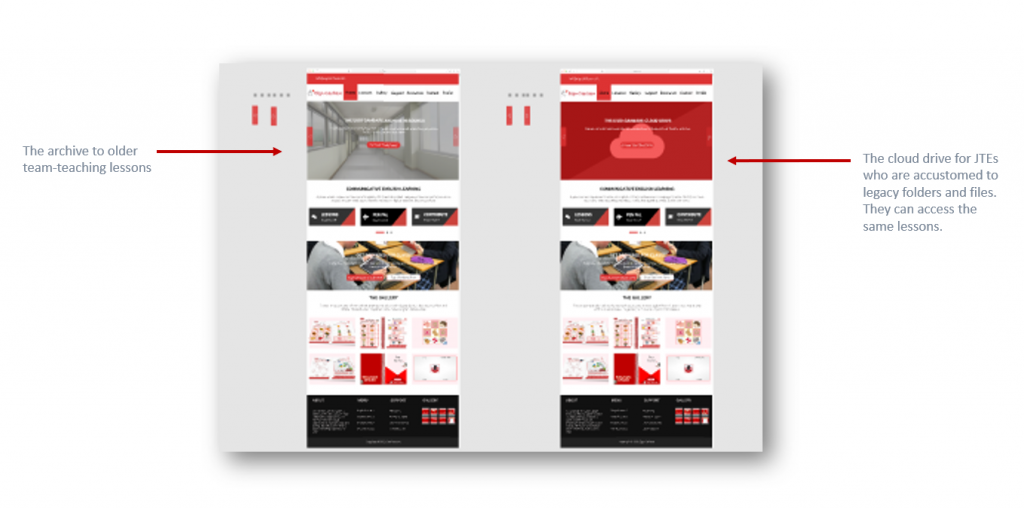
The previous Eigo Ganbare website contained an abundance of endless resources. But, as more resources were added, it became more difficult for the users to navigate the website. Thus, I had to solve this problem by simplifying the resources. Some parts were integrated and others were removed.
In this low-fidelity prototype, I refined the designs of the user flow, the user interface, and the user experience. The goal was for JTEs and ALTs to find useful teaching materials that they needed quickly.
.
Design Mockups
The high-fidelity mockup designs featured new visual components for team-teaching lessons, the Pen Pal project, the English club, and more.
They also included a feature that provided a pathway for teachers to access group community support and share ideas. This provided a positive and supportive atmosphere for teachers in Japan.
High-fidelity
prototype
In this high-fidelity prototype, the JTEs and ALTs could easily navigate between classroom lessons and extracurricular activities. Their teaching material needs were categorized with a minimalistic and modern look.
Click this link to view the desktop version of the high-fidelity prototype.
User Research & Future Outlook
Regarding user research and usability testing, I had to incorporate insights into creating of creating lessons tailored for the Japanese and gently introducing other countries’ cultures and customs. I also introduced EdTech, which was a rather new concept for most Japanese schools.
My own experience as an ALT in Japan and communicating with other ALTs who shared their unique challenges was what motivated some of us to strive to improve the shortcomings of team-teaching in Japan.
Web Development
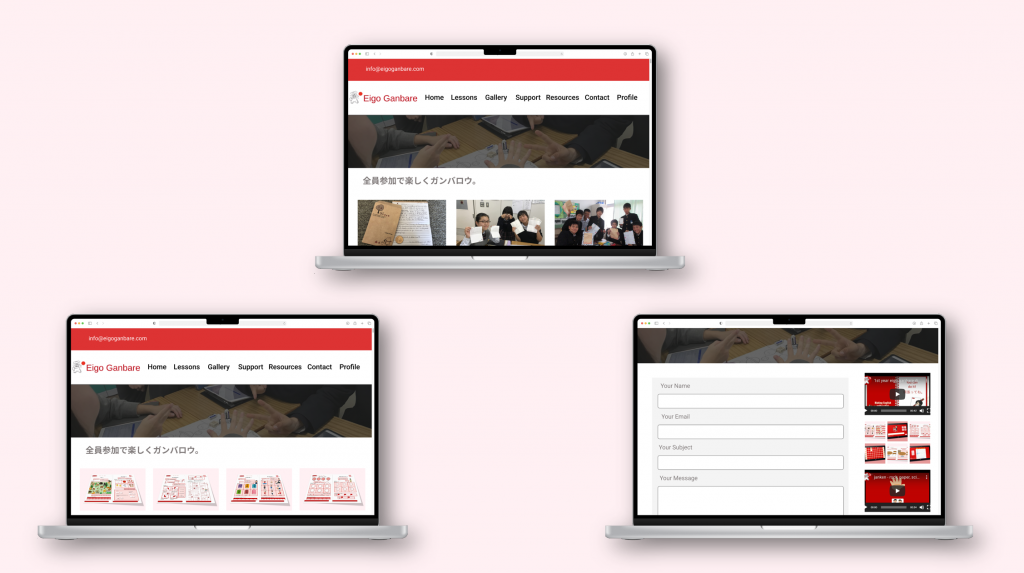
I developed a fully working website of Eigo Ganbare. It works on school laptops, tablets, and mobile devices.
If you’re wondering what Eigo Ganbare means, it means “to do your best in English”.
Why not check it out?