

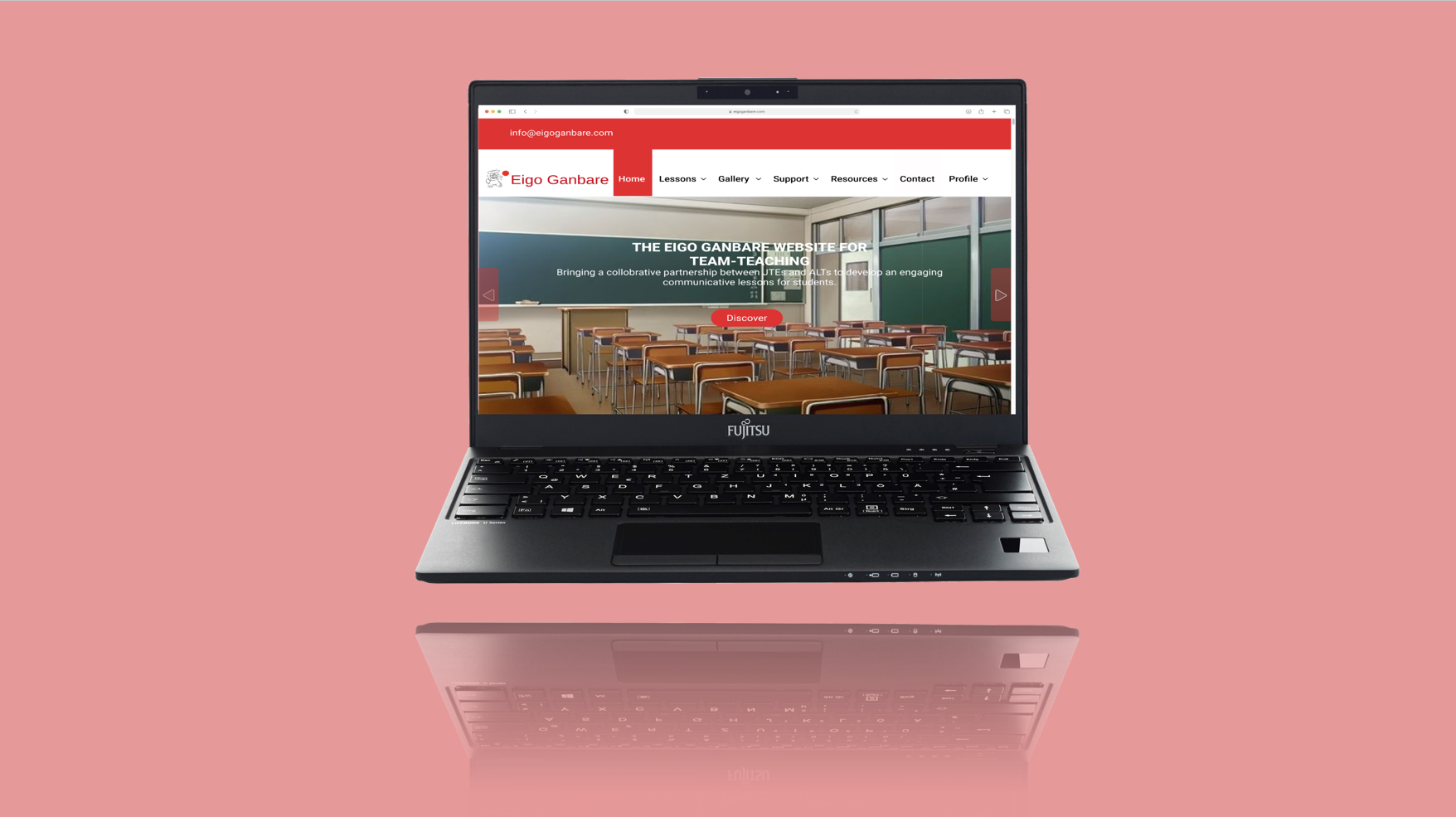
Eigo Ganbare: Team-Teaching Resource

PowerPoint Presentation: Eigo Ganbare
Eigo Ganbare
began with a simple mission: to strengthen collaboration between Japanese Teachers of English (JTEs) and Assistant Language Teachers (ALTs) in the classroom. Over time, it grew into a comprehensive EdTech platform that supports both teaching and learning through interactive pair‑work lessons, group presentation activities, gamified practice, and a suite of AI‑enhanced tools. These include a teacher tool that generates true‑and‑false questions and interactive vocabulary games from uploaded textbook materials, an AI hub for guided classroom research, and a conversational AI companion for one‑to‑one speaking practice.
Throughout its development, I continuously refined the interface to create a more intuitive and streamlined experience, ensuring educators can navigate the platform efficiently and focus on what matters most: supporting their students.
Website: http://www.eigoganbare.com
Manuscript: https://annettelee.eigoganbare.com/team-teaching-sample-manuscript

Goal
Redesign the UX/UI to strengthen collaboration between JTEs and ALTs and create a more robust team‑teaching platform
Blend traditional teaching methods with modern, technology‑driven approaches
Introduce interactive, gamified supplemental activities to engage and motivate learners
Problems
ALTs struggle to teach material JTEs haven’t yet introduced, revealing gaps in curriculum visibility and alignment
JTEs and ALTs bring different cultural and pedagogical teaching styles, which can lead to inconsistent classroom delivery
These challenges highlight the need for better coordination tools and clearer shared workflows, making thoughtful UX design essential for supporting effective team‑teaching
Design
User Experience, User Interface
Usability Testing, Design System
I’m the founder & the sole designer

Design Thinking: The Meaning of Eigo Ganbare
The term “Eigo Ganbare” is a motivational phrase that was put on students’ worksheet as a message of hope and encouragement. It translates to “do your best” or “hang in there” and inspires them to stay motivated and keep trying, no matter how challenging learning English may be.
It also became a message for Japanese Teachers of English (JTEs) and Assistant Language Teachers (ALTs), encouraging them to enjoy teaching, embrace co-teaching, and confidently engage with new challenges. The phrase embodies the spirit of determination and the positive exchange of cultural and educational values.

Competitive Analysis

User Flow

A clearer, more intuitive user flow was created to help JTEs and ALTs move through the platform with ease. It supports a range of teaching tasks and resources, allowing educators to shift smoothly between planning, materials, and classroom activities.
To fit different teaching styles, the flow accommodates both traditional printouts and modern classroom technology like school‑issued tablets. This flexibility ensures teachers can work in the way that feels most natural to them.
By simplifying the pathways and reducing friction, the new flow strengthens classroom preparation and creates a more supportive experience for everyone using the platform.
For a full, expanded view of the site map, click here.

Personas


Identifying the Challenges

Ideation

In the low‑fidelity ideation phase for Eigo Ganbare, I set out to design an experience that genuinely supports how ALTs and JTEs plan, teach, and collaborate in Japanese schools. Because the platform’s purpose is to strengthen team‑teaching through accessible lesson materials and digital activities, I focused on creating a structure that feels intuitive, culturally aware, and aligned with the daily rhythm of school life.
My early design thinking centered on three guiding questions:
• What do ALTs and JTEs need most from a shared teaching platform?
• How can the interface better support team‑teaching workflows and communication?
• How can thoughtful UX design contribute to more effective English instruction in Japan?
These questions shaped a design strategy aimed at simplifying the resource ecosystem while making collaboration easier and more natural.
To achieve this, I focused on three core actions:
• Integration: Combine overlapping or similar resources to reduce redundancy and help users quickly understand where to go.
• Elimination: Remove outdated or low‑value materials to create a cleaner, more purposeful interface.
• Refinement: Rework user flows so teachers can quickly find what they need—whether they’re planning during a free period or grabbing materials right before class.
The low‑fidelity prototype became a practical space for exploring these ideas. Sketching early layouts allowed me to test navigation patterns, experiment with clearer categorization, and identify friction points before moving into visual design. This iterative process ensured that the foundation of the platform supports both the collaborative nature of team‑teaching and the broader goal of improving English education in Japan.

Color Palette


Usability Testing

In usability testing, I observed how easily educators could complete essential tasks and locate the resources they needed. This helped ensure the platform supported fast, efficient workflows so teachers could spend less time navigating tools and more time supporting their students.
Wireframes & Visual Design

As I moved into mid‑fidelity wireframes, my focus was on translating Eigo Ganbare’s structure into a clear, teacher‑friendly interface. The wireframes established core layouts and interaction flows that support lesson planning, team‑teaching activities, teacher tools, AI‑powered features, and extracurricular resources. I emphasized simplicity and usability so ALTs and JTEs could easily navigate team‑teaching modules, Pen Pal workflows, and English club content with minimal friction.
In the high‑fidelity stage, the interface evolved into a polished, modern environment grounded in Eigo Ganbare’s brand identity. Purposeful typography, balanced spacing, and a red‑and‑white palette—reflecting Japan’s national colors—created a clean and culturally relevant visual system. Each component was refined to reduce cognitive load and support quick decision‑making during busy school days.
During this phase, I also proposed the concept of ALTing in Japan, a new community support space designed to connect ALTs through dedicated Reddit and Discord groups. While conceptual only, the idea reinforces the platform’s goal of fostering collaboration, shared learning, and professional support among educators teaching in Japan.
Together, the mid‑fi and hi‑fi designs form a cohesive system that streamlines navigation, integrates AI‑enhanced tools, and supports both collaboration and community. The final visual direction balances minimalism with warmth, helping JTEs and ALTs feel confident and supported as they use Eigo Ganbare in their daily teaching practice.

Impact
My goal with Eigo Ganbare was to create a user experience that genuinely supported educators. I focused on designing interfaces that felt clear, approachable, and purposeful—tools that made English learning more practical and enjoyable for students while strengthening the team‑teaching experience for JTEs and ALTs.
As the project gained visibility, I saw a meaningful rise in engagement within the educator community. The ALTinginJapan group grew to 7,800+ members, reflecting a growing interest in sharing resources, discussing teaching practices, and connecting around English education in Japan. This increase, along with positive feedback from the JET Program community and other educator networks, showed that the work resonated with teachers and helped strengthen the support system around English instruction.
Together, these outcomes demonstrate how thoughtful design can empower educators, encourage collaboration, and create a more engaging learning environment for students.

Future Outlook

Looking ahead, Eigo Ganbare will continue evolving into a more adaptive and student‑centered learning ecosystem. Building on the foundation of culturally responsive lessons, the platform will expand its library of content that feels familiar to educators while offering students increasingly engaging, interactive experiences. Future updates will deepen the integration of global cultural perspectives, helping students connect with the wider world in meaningful and age‑appropriate ways.
As EdTech adoption grows in Japanese schools, the platform will focus on delivering tools that feel seamless within the classroom environment. This includes enhancing the AI Study Hub for students, refining interactive vocabulary games generated from textbook uploads, and strengthening the conversational AI companion to support more natural, confidence‑building speaking practice.
Eigo Ganbare will also continue improving the team‑teaching experience. Insights from ALTs, JTEs, and educator communities will guide future features that make communication, lesson planning, and classroom coordination even more intuitive. The long‑term vision is to create a platform that not only supports English learning, but also strengthens the relationships and collaboration at the heart of Japan’s team‑teaching model.

Here is the platform in action, demonstrating how the final product supports both educators and students in a meaningful way.

