
IEP&Me
Their Mission: IEP&Me ensures every student can achieve academically regardless of their disability by providing an online platform that empowers students to take control of their learning through an individualized learning and advocacy plan. IEP&Me supports students, teachers, and families throughout the special education process, seeking to create transparency, clarity, and ease so that students can be lifelong learners and valuable members of society.
My Role: I was one of the team members of IEP&Me, a UI Designer who helped to develop an “easy to use” IEP online platform.
Goals
- Designed an IEP/504 online platform for students with a disability
- Addressed students’ accommodation needs through support services and educational resources
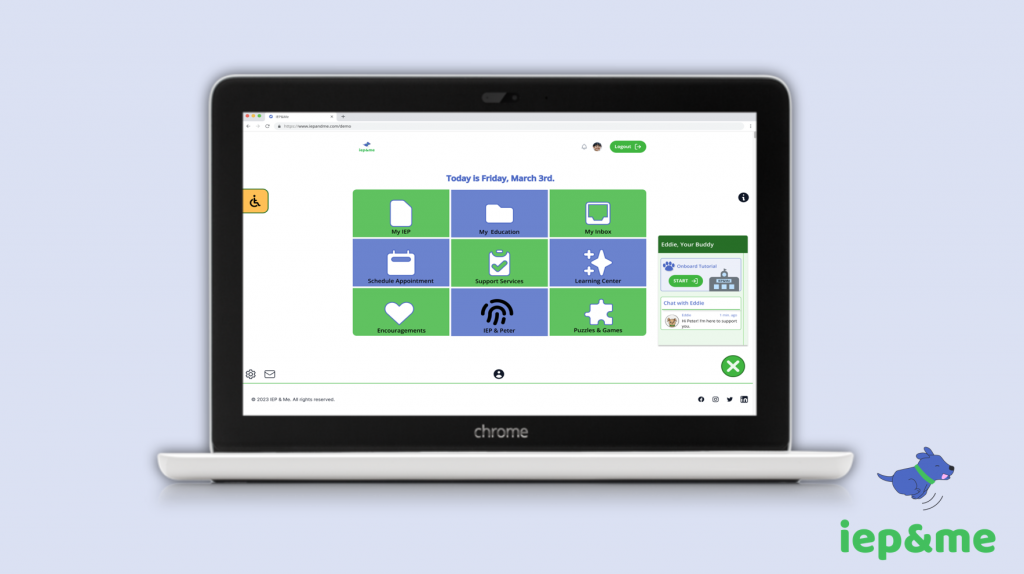
- Integrated the “how I learn” feature with an AI buddy helper named Eddie
- Cohesive system, minimalist, and easy-to-use!
Problems
- Individual Education Plan (IEP) was not student-led
- IEPs were technical and filled with jargon terminologies
- Lengthy, complex, and difficult!
Design
User Experience, User Interface, Design System
Design System
Team: 1 product manager, 1 lead designer (mentor), 1 designer, and 3 developers
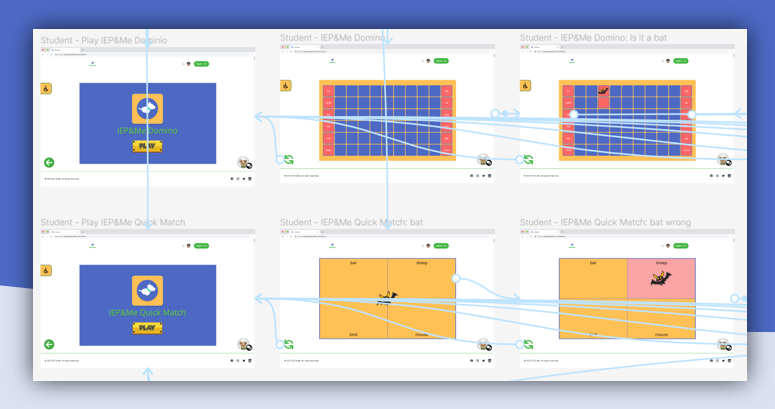
User Flow
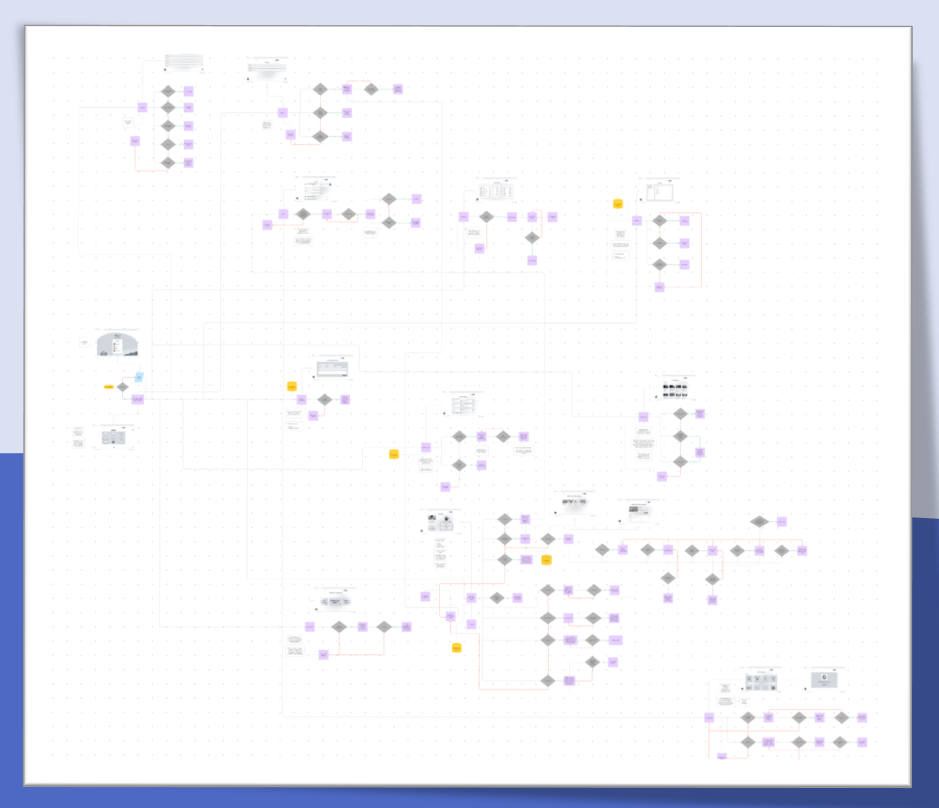
Nine primary features of the student IEP&Me platform. View this in FigJam.
Personas
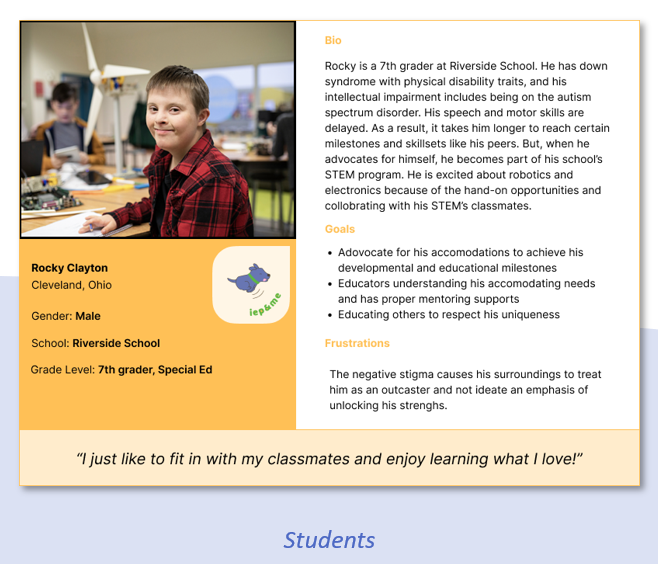
This is the student’s persona bio. The child might not be able to speak up for his/her own needs and preferences in the IEP process.
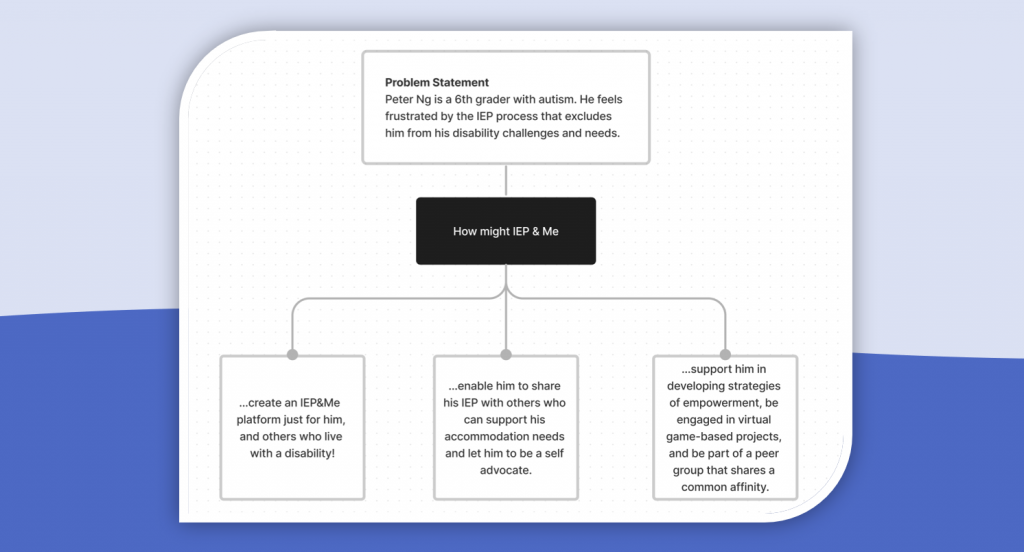
Identifying the Challenges
Design Mockups
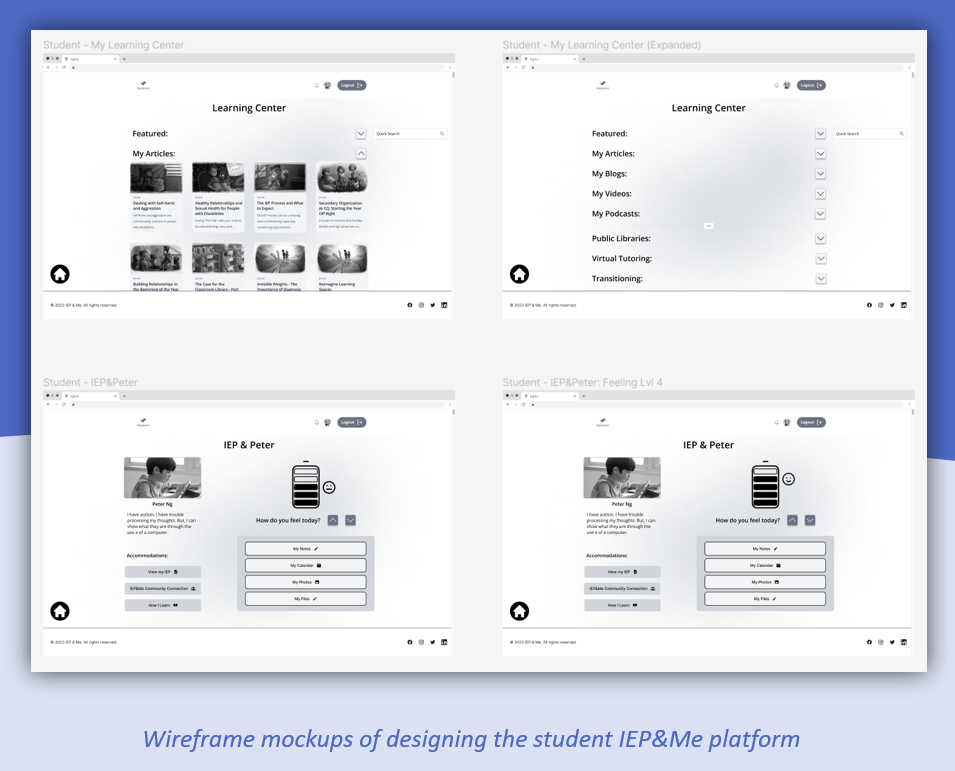
While working on my competitiveness analysis, ideating the design thinking concepts, and the wireframing screens for these design mockups, I empathized with the students who have a disability and understood their challenges. I wanted to provide a solution that would simplify and improve their user experience in the IEP process and help them meet their accommodation needs. My goal was to enable them to receive support services and have a chance to advocate for themselves.
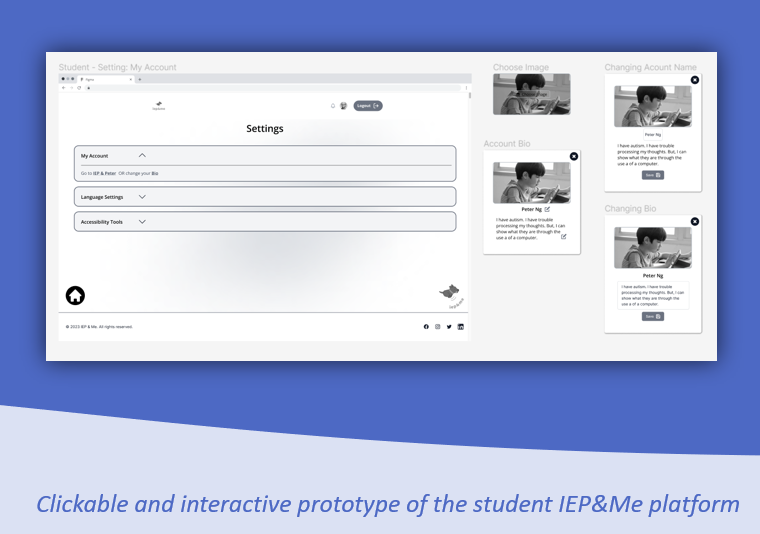
Low-fidelity prototype
I interviewed some students to get more insight into their disability and its impact on their IEP process.
Their feedback helped me improve the design iterations. Then, I completed the low-fidelity prototyping design and created the compliance requirements with my mentor’s support.
Compliance Requirements: Student IEP&Me Platform
.
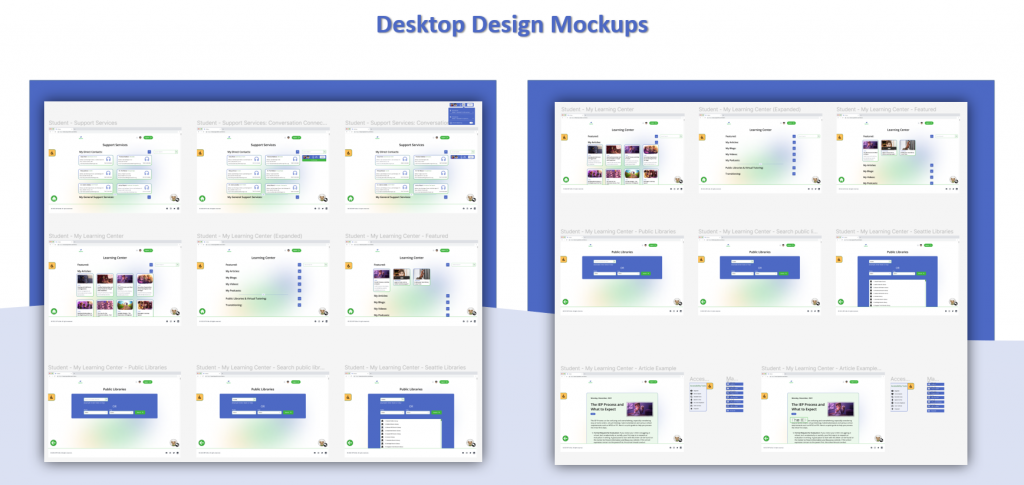
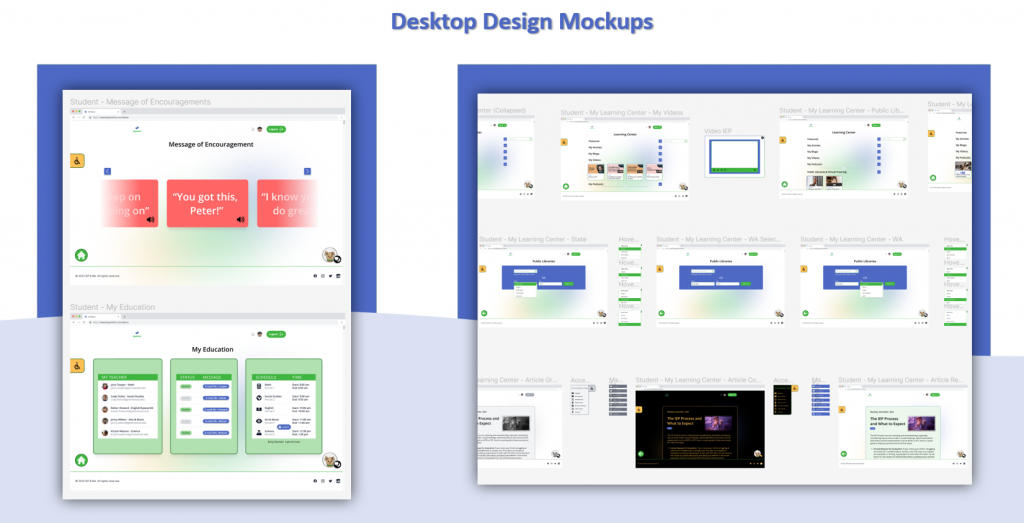
Design Mockups
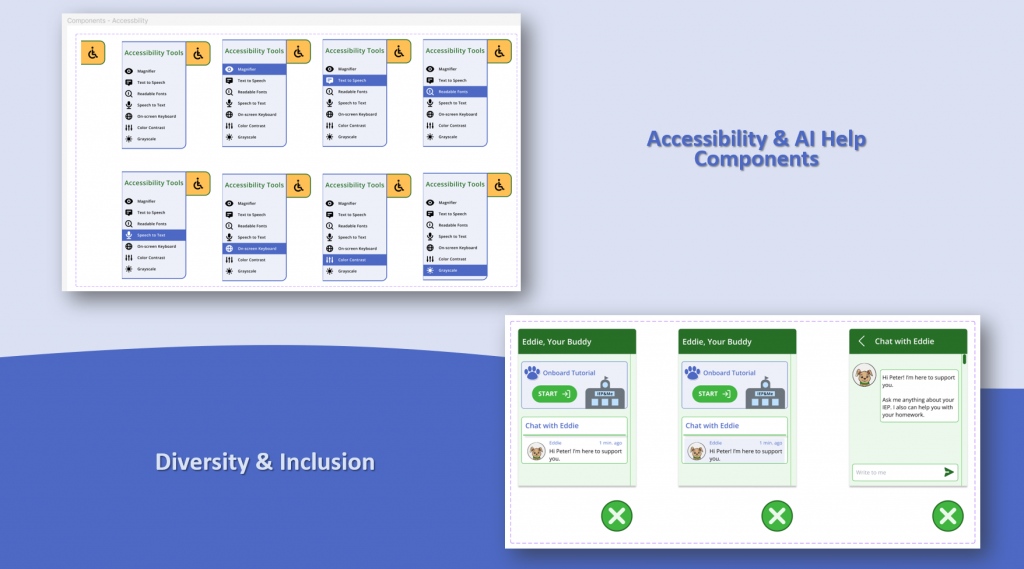
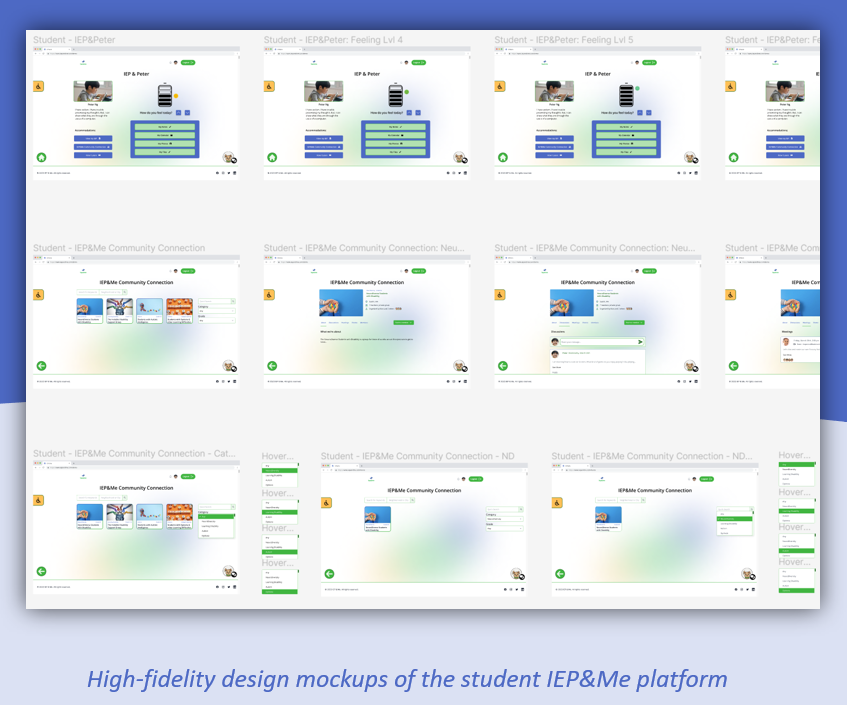
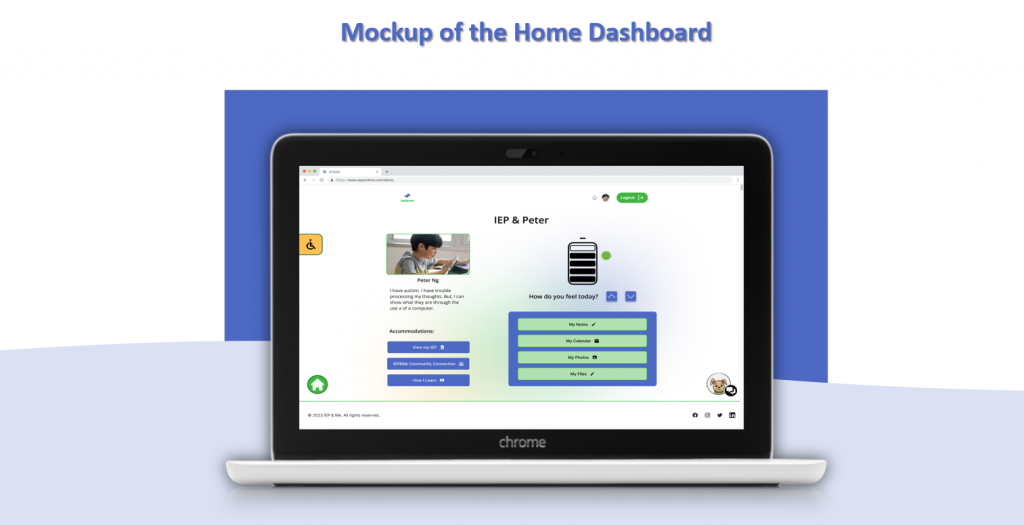
During the high-fidelity design mockups, I kept expanding and improving the features and functions of the platform. For instance, I put Accessibility at the front of the website, where it was more visible and user-friendly. I also hoped this platform could give these students a sense of inclusive empowerment.
High-fidelity prototype
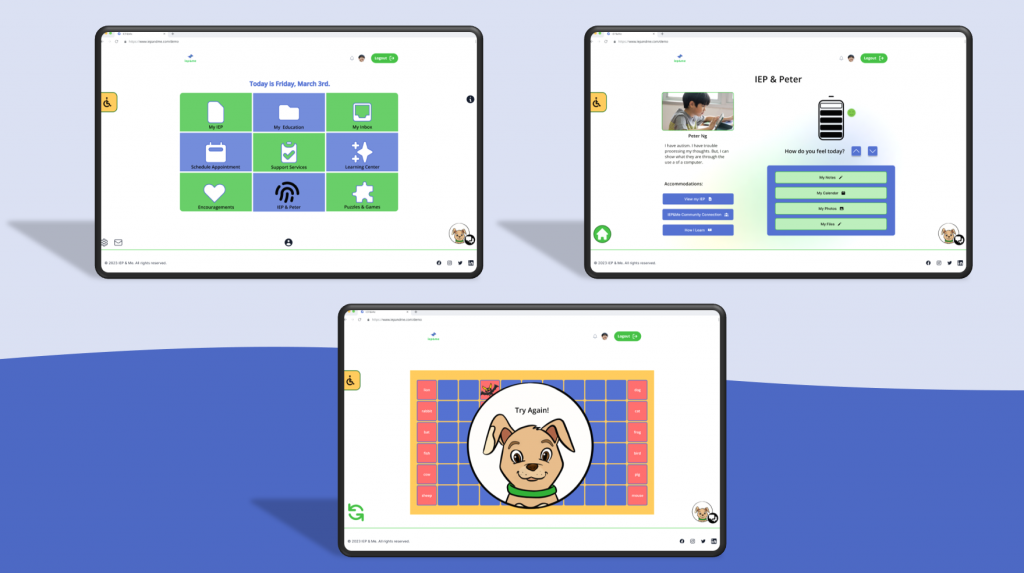
At the high-fidelity prototyping, I created a streamlined platform experience. The students could quickly and easily share their IEP. They could also connect with their established service support specialists and belong to a peer group that shares a common affinity.
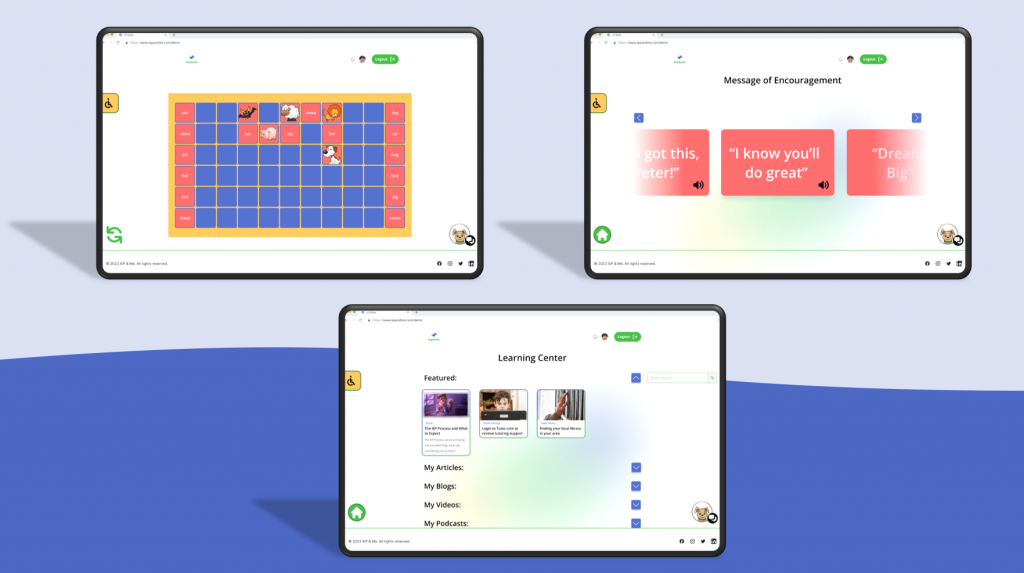
This platform also distinguishes itself with the integration of Special Ed/Social Emotional learning resources. It would motivate students in their academic studies and their future aspirations.
Flow 1 – Student IEP&Me platform
Takeaway of What I Learned
The takeaway from this valuable opportunity was learning more about Special Education’s Individual Education Plan (IEP) and working alongside a diverse team who support those with disability. I was also impressed by the self-advocacy of people with disabilities, the importance of accessibility, and the necessity to make it available to those who need it. I was grateful to use my skills to create high-quality UI/UX designs.
IEP&Me helped me improve my user flow design skills. I created and polished design mockups, and enhanced the navigation and engagement of the design prototypes. I also successfully completed the designs of the student IEP&Me online platform.