PowerPoint Presentation: Student IEP&Me Platform

IEP&Me


Their Mission: IEP&Me ensures every student can achieve academically regardless of their disability by providing an online platform that empowers students to take control of their learning through an individualized learning and advocacy plan. IEP&Me supports students, teachers, and families throughout the special education process, seeking to create transparency, clarity, and ease so that students can be lifelong learners and valuable members of society.

My Role: As a UX/UI Designer with a neurodivergent perspective, I contributed lived experience that helped shape a more accessible and student‑centered IEP platform.

Figma Prototype: The Student IEP&Me Platform


Designed an IEP/504 online platform for students with a disability

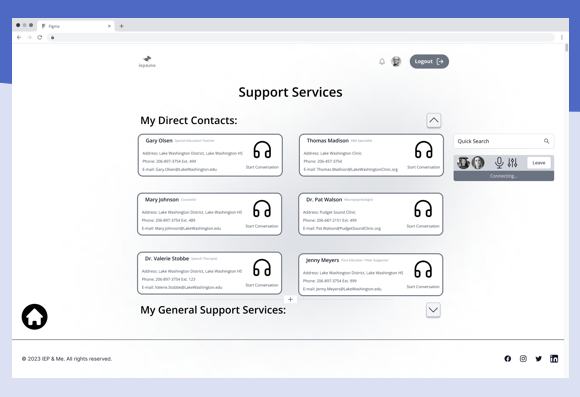
Addressed students’ accommodation needs through support services and educational resources

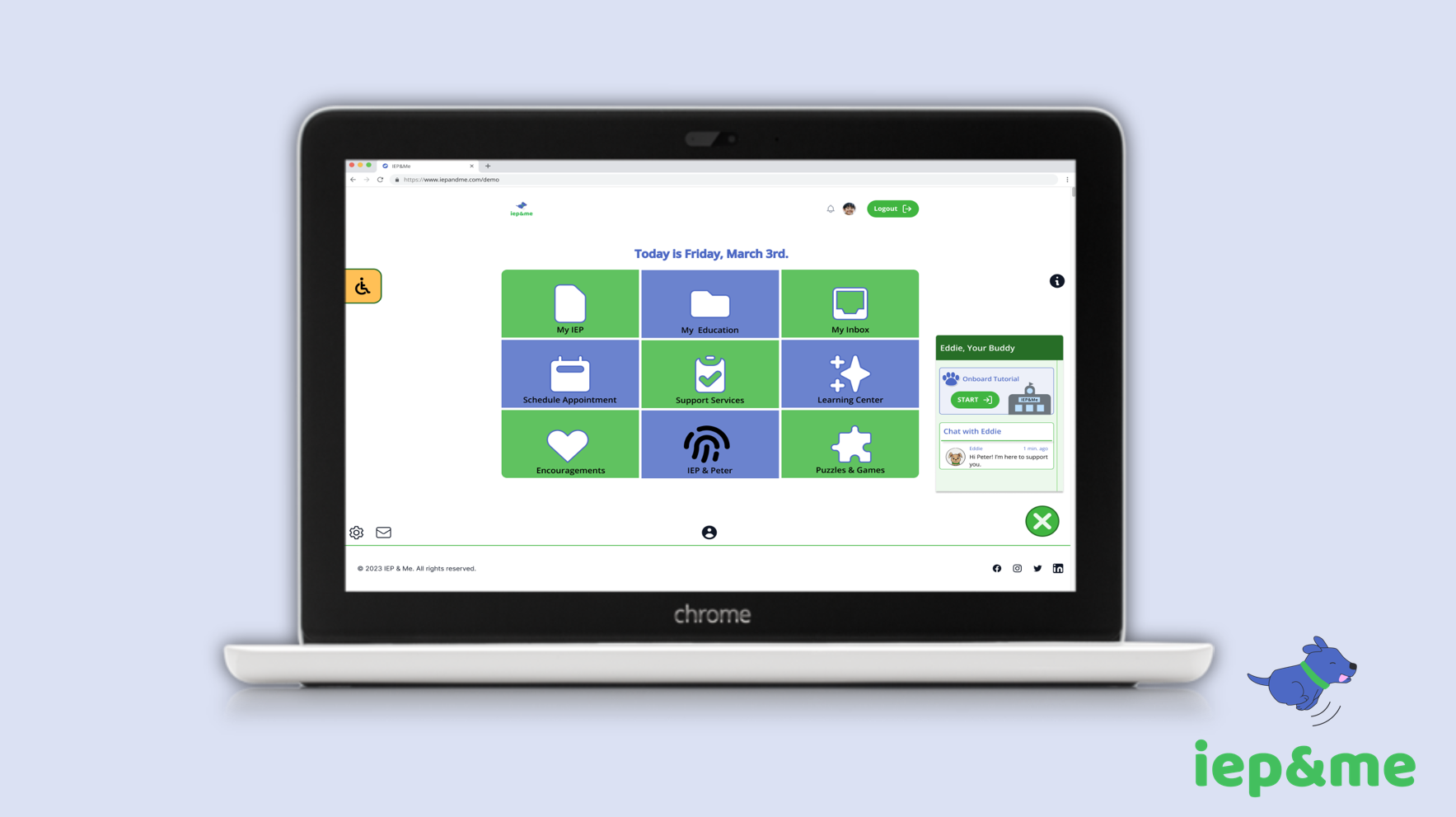
Integrated the “how I learn” feature with an AI buddy helper named Eddie

Cohesive system, minimalist, and easy-to-use!

Individual Education Plan (IEP) was not student-led

IEPs were technical and filled with jargon terminologies

IEPs are lengthy, complex, and difficult, which presents a need for intuitive and accessible tools to simplify the IEP process

User Experience, User Interface, Design System

Team: 1 product manager, 2 lead designers, 1 designer, and 3 developers

Competitive Analysis


Click the below link for a comprehensive explanation.

Personas


Identifying the Challenges


User Flow


Click on this link for a comprehensive view of the features of this IEP&Me platform for students.

Design Thinking


Scenario:

The user is a student who faces disability challenges and would like to receive support services from their school. Navigating the needed services have been a frustrating, difficult, and lengthy experience for the user and they would like to have a simple and centralized IEP, “ Like, here, this is my disability and this what I need…help!

Concept:

This online platform for students with disabilities offers their very own access to their IEP and the ability to share it with more than one school. It allows the user to get professional support services efficiently, view pending/received status support, and assist them in academic success. It has features to cover what the user would mostly use, such as view IEP, checking the binder, scheduling important appointments, access to support services/resources, play with fun gamifying activities, and much more.

Key Highlights:

• Amplifying student-led, student-centered, and listening to students’ voices

• 9 primary features to easily navigate the student platform + the day of the week reminder

• Simple & minimized UI appearance for students with disabilities.


Click the below link for a comprehensive explanation.

2. Design Thinking Concepts

Compliance Requirements


User Value & Outcomes:

Value

The My IEP feature provides students with direct access to their Individualized Education Plan (IEP). It helps them alleviate information overload and focus on one information at a time. School districts using IEP&Me can provide efficiency and error-free accommodations for their students.

Outcomes

Students can easily access and view their IEP information on a single platform.

School districts can efficiently and accurately provide accommodations to their students through the use of IEP&Me.

Acceptance Criteria:

The My IEP feature should display all relevant information as per the IEP Data Entry form.

The feature should allow users to collapse and expand information using the ‘up’ and ‘down’ buttons.

The ‘Export to PDF’ feature should work seamlessly and the PDF file should contain all the information in the IEP.

The ‘Home’ button should take the user back to the home dashboard without any glitches.

Click the below link for a comprehensive explanation.

3. Compliance Requirements: Student IEP&Me Platform

Design Ideation


Student Profile UI Design Mockup

As I moved through competitive analysis, explored design‑thinking concepts, and began shaping early wireframes, I found myself continually returning to the lived experiences of students with disabilities—including my own. Understanding the barriers they often face in navigating the IEP process gave me a deeper sense of responsibility and purpose in this project.

My research phase included analyzing existing platforms, developing personas, identifying gaps in current solutions, and reviewing compliance requirements. These insights helped me map out a user flow that prioritized clarity, autonomy, and accessibility. With each iteration, I aimed to design an experience that not only simplified the IEP journey but also empowered students to understand their plans, access support services, and advocate for themselves with confidence.


As I transitioned into creating the design mockups, this foundation guided every decision—from layout and language to interaction patterns. In UX/UI design, accessibility and inclusion aren’t just considerations; they are essential principles. This project allowed me to bring those values to the forefront and create a platform that reflects the diverse needs of the students it serves.

Wireframe mockups of designing the student IEP&Me platform

Mid-Fidelity Process


Building on the foundation of my early research and wireframes, I moved into direct conversations with students to better understand how their disabilities shaped their experiences with the IEP process. These interviews offered nuanced, personal perspectives that deepened my understanding of their needs and revealed gaps that weren’t visible through competitive analysis alone.

Clickable and interactive prototype

Their feedback became a guiding force in my design decisions. With these insights in hand, I developed a mid‑fidelity prototype that translated their challenges into clearer pathways, more intuitive interactions, and accessible design patterns. Throughout this stage, I worked closely with my mentor to ensure the evolving design aligned with compliance requirements and best practices in accessibility.

This phase was about more than refining screens. It was about shaping a user experience that genuinely supports students during the planning and implementation of their IEPs, giving them tools that feel approachable, empowering, and built with their realities in mind.

Primary Colors


Secondary Colors


Visual Design


High-fidelity design mockups of the student IEP&Me platform


With the mid‑fidelity prototype validated, I moved into the high‑fidelity design phase, where the focus shifted toward clarity, usability, and visual accessibility. Every design choice, including typography, color contrast, layout, and interaction patterns, was guided by the goal of making the platform easy to read and intuitive for students with diverse disabilities.

During this stage, I refined the interface to support a more guided and empowering experience. I incorporated digital assistive tools such as adjustable text settings and simplified navigation to help students engage with their IEPs at their own pace. I also explored the integration of an AI assistant to offer real‑time support, answer questions, and help students better understand their plans.

Throughout the process, accessibility remained a central principle rather than an afterthought. The high‑fidelity designs were crafted to feel welcoming, functional, and inclusive, ensuring that students could confidently navigate the platform and access the resources they need.

High-Fidelity Process


After finalizing the visual design, I moved into building the high‑fidelity prototype, where the goal was to transform complex IEP information into a streamlined, easy‑to‑navigate experience. Many students face attention, processing, or comprehension barriers due to their disabilities, so it was essential to create a flow that minimized cognitive load and helped them quickly find what they needed without feeling overwhelmed.

In this phase, I refined the interactions to make the platform feel intuitive and supportive. Students could easily access and share their IEP, connect with their service support specialists, and engage with peers who understood their challenges. The design emphasized clarity and simplicity, ensuring that essential actions were always within reach and that the overall process felt manageable rather than intimidating.

A key part of this prototype was the integration of Special Education and Social‑Emotional Learning resources. These elements were included to motivate students academically while also supporting their personal growth and future goals. By bringing these resources together in one place, the platform became more than a tool for managing IEPs. It became a space that empowers students, strengthens their sense of belonging, and enhances their educational journey.

Click below to take a closer look at the prototype

Student IEP&Me platform

Mockup of the Student Profile


Design Mockups


Impact


The impact of this platform reaches far beyond improving the student interface. Many schools are struggling with shortages in special education professionals, limited funding, and rising burnout among teachers and support staff. These systemic pressures often leave students without timely guidance, especially when navigating complex processes like referrals, service coordination, or understanding their IEP.

By giving students direct access to clear information, supportive tools, and a welcoming community, the platform helps ease the strain on educators while strengthening student independence. Instead of waiting for overloaded staff or feeling lost in a complicated system, students can explore resources, understand their IEP, and connect with support services through a single, streamlined experience.

A key part of this impact is the AI companion built into the platform. Designed to feel friendly and approachable, it guides students through tasks, answers questions in kid‑friendly language, and offers encouragement when they need it. This helps students stay engaged and reduces the confusion that often prevents them from accessing support.

The platform also creates a sense of belonging by connecting students with peers who share similar experiences. This community space helps reduce isolation, encourages mutual motivation, and fosters collective advocacy.

By combining accessible design, supportive technology, and a strong peer community, the platform not only empowers students but also alleviates some of the stress placed on educators and school staff. It becomes a sustainable tool that supports the entire special education ecosystem.


Takeaway of what I learned


Working on the IEP&Me platform allowed me to deepen my understanding of the challenges students with disabilities face and the pressures placed on the educators who support them. This project reinforced how thoughtful design can reduce barriers, strengthen confidence, and create meaningful change within the special education ecosystem. It also reminded me that accessibility is not a feature — it’s a responsibility.

User Flow Design Enhancement:

I refined the platform’s user flow to transform complex processes into clear, manageable steps. By simplifying navigation and reducing cognitive load, I created pathways that help students quickly access what they need without confusion or overwhelm. This work strengthened my ability to design intuitive, supportive experiences that guide users naturally through their tasks.

Empowering Accessibility:

Accessibility shaped every stage of the design process. I focused on creating an experience that is readable, approachable, and adaptable to diverse needs. From visual clarity to assistive features, the goal was to empower students to understand their IEP, access resources independently, and feel a sense of belonging within the platform. This project reaffirmed the impact of designing not just for compliance, but for genuine empowerment.

This project showed me how user flow design enhancement and empowering accessibility can transform barriers into opportunities, and it affirmed how my own lived experience as a neurodivergent designer strengthens the work I create for students who deserve to feel understood and supported.